 |
| Rebel forces have reached Misratah |
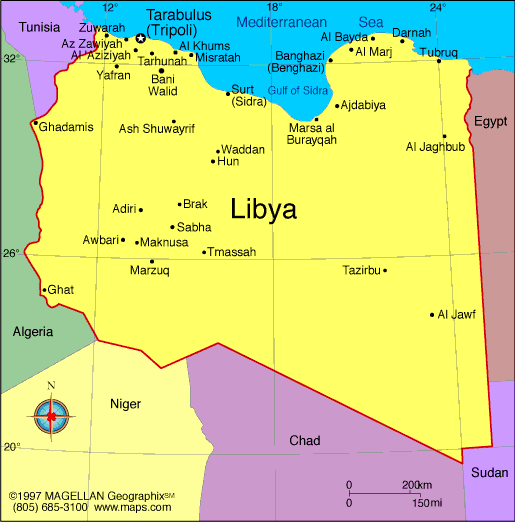
Today the International Criminal Court produced arrest warrants for Qaddafi, his son Saif Qaddafi, and the military intelligence chief Abdullah Senussi. This matters as the ICC has been struggling for legitimacy and truly needs to prosecute these criminals but that's not likely as NATO and the rebels are clearly trying to kill all three. France and the UK have begun using attack helicopters, successfully covering a rebel advance to Misrata.
You are kidding yourself if you thought NATO wasn't trying to kill Qaddafi.And you really had to be kidding yourself if you thought the TNC Rebels aren't trying to kill Qaddafi. NATO long ago exceeded its original mandate in UN resolution 1973 which called for a No-Fly-Zone and the protection of civilians.
What happens if/when one of them succeed? Max Fisher from the Atlantic makes an argument that the death of Qaddafi will cause the country to become embroiled in civil strife. Unlike what is happening now?
NATO is not trying to start a civil war, it's trying to end one by helping the side that almost everyone in the free world is hoping will prevail. NATO is seeking a regime change in Libya and so are millions of Libyans. Obama, Sarkozy, and Cameron want a authoritarian dictatorship to be replaced by a democratic republic and I think their approach has been correct and so do Libyans. NATO wishes that more of the strikes could be conducted by Libyan rebels and so do Libyan Rebels.
The evidence Fisher presents is that no national identity exists in Libya because it is a young nation state and that a political vacuum will be created when he takes that final tuk-tuk ride.
"Qaddafi's death would risk imploding what remains of the country's leadership, leaving senior military officers suddenly rudderless and face with the difficult choice between continuing the fight against the rebels, joining them against whatever remained of the regime, or, more likely, turning on one another in a race for power." - Max Fisher, The Atlantic
 |
| Saif Qaddafi |
When Qaddafi dies his loyalists will really have two options: Continue fighting or not. Whether they jockey for power among themselves is irrelevant because whoever rises to the top will either surrender or not. The fighting isn't going to end until the TNC/Rebels have a firm grip on the countries coercive elements. The rebels may be "dubious" as he writes but they're the only horse in town.
Fisher then undercuts his own argument by telling us the Qaddafi-dead environment will lead to tribal fighting that will leave many more dead like it already has in Misrata.
"The question is whether we want to risk a nation of Misratas." ends Fisher.
Wary of militancy and a escalation of NATO airstrikes? They're working-
"In late May the rebels offered an amnesty to government troops if they defected. The move appeared to have worked when eight senior army officers appeared on May 30th in Rome, announcing that they had abandoned the Libyan regime. The officers, who were the most senior of a group of some 120 soldiers, had been supported in their defection by the Italian intelligence services. One general claimed that the Libyan army had been reduced to one-fifth of its original size. Clearly disaffected with Colonel Qadhafi, they accused him of waging genocide against his own people and argued that he would not be able to remain in power for much longer." Economist Intelligence Unit 6/13/2011
 |
| Protesters in Ben Ghazi on March 31, 2011 |


No comments:
Post a Comment